

Quick Summary: Setting clear goals gives you direction and energy, especially when work feels busy or scattered. This guide explains how SMART goals help you turn intentions into action and build habits that stick.
Setting SMART Goals
Ever end a workday wondering what you actually accomplished? It happens more often than people admit. Feeling unproductive can be draining. With constant demands pulling at your attention, finding clarity about what you want to achieve becomes essential.
This is where goals come in. Not just task-list items, but meaningful ambitions that move you forward. These might be quick wins or long-term aspirations. Maybe you want to manage your time better, build financial confidence, strengthen your presentation skills, earn a promotion, improve meeting habits, expand your network, or work more effectively with your manager. Whatever your motivation, start by reflecting on what you want and why it matters. That reflection gives you direction, but vision on its own isn’t enough. You need structure to follow through. That’s where SMART goals help.
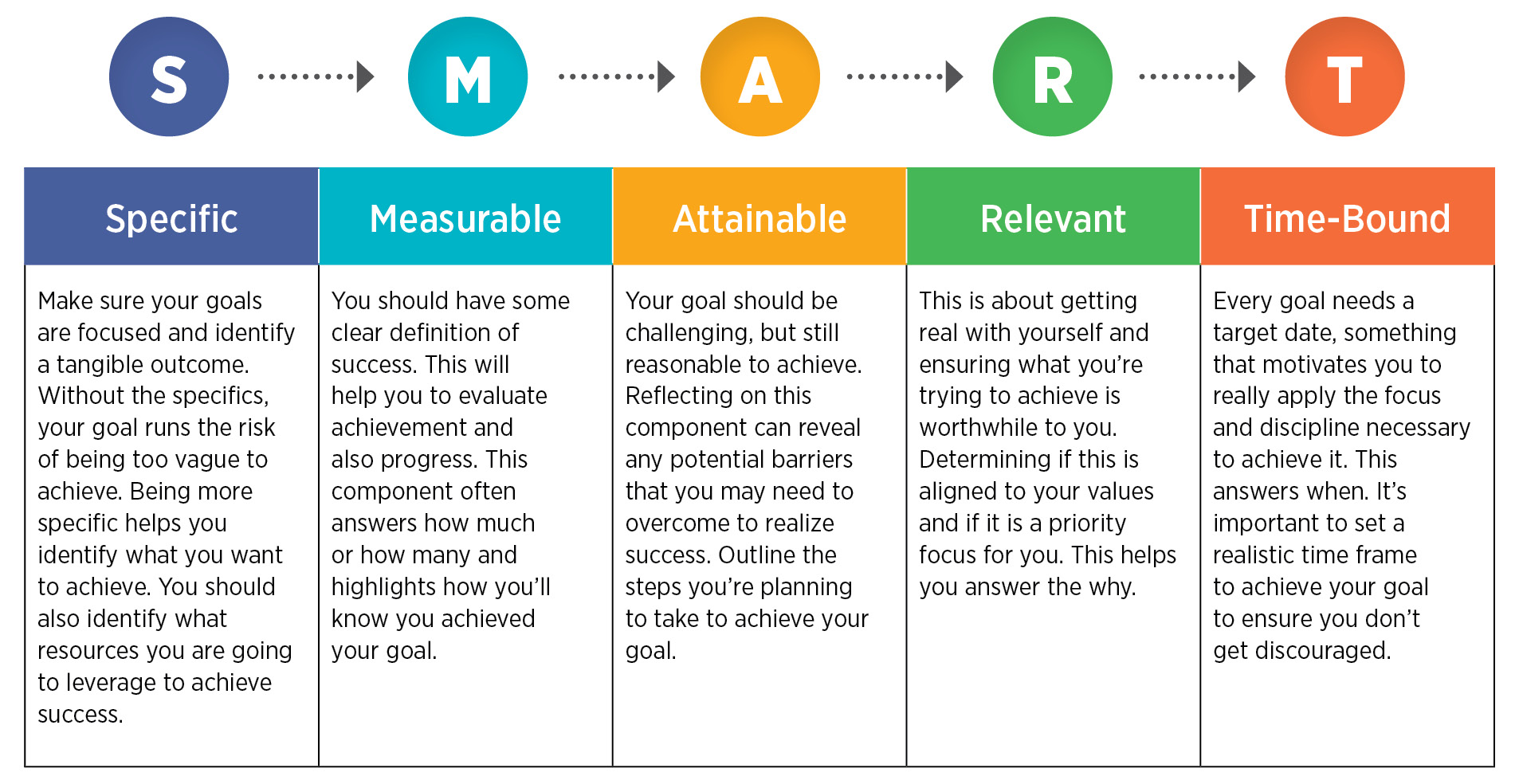
Why the SMART Framework Works
The SMART approach has been around for decades for a simple reason. It helps your brain translate goals into manageable actions. Our brains love routine because it conserves energy. When you introduce something new, you may hit resistance at first. SMART goals reduce that friction by breaking your intentions into clear steps that build consistency.
With consistency, habits start to form. Even on days when you don’t feel motivated, your brain will nudge you back toward the behaviours that support your goal. Over time, your goals shift from something you’re working on to something you naturally do.
Next Steps
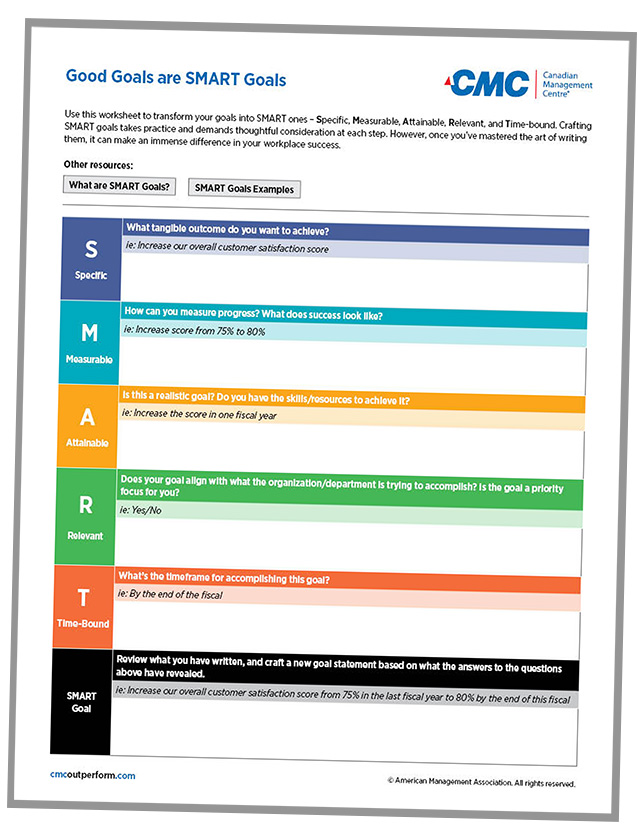 Take a moment to look at your current goals. Are they SMART? If you want support getting started,
 Frequently Asked Questions
What does SMART actually mean?
SMART stands for Specific, Measurable, Achievable, Relevant and Time-bound. These five elements help you define goals that are clear, motivating and realistic to follow through on.
How does making my goals SMART help me?
When your goals are specific and measurable, you know exactly what to work toward. This reduces overwhelm and helps you focus your energy on actions that make progress visible.
Can SMART goals support personal development too?
Absolutely. SMART goals work for skills, habits, behaviour changes and long-term aspirations. They give structure to both personal and professional growth.
What if my goals change over time?
They should. As your priorities shift, revisit your goals and reshape them using the SMART framework. Adjusting your goals keeps them relevant and meaningful.
© Canadian Management Centre. All rights reserved.